Go Outside: Balancing Digital Life with Outdoor Play
As we navigate the challenges of raising children in the digital age, it's crucial to remember the importance of outdoor play and unstructured time. While technology offers many benefits, it shouldn't come at the expense of the physical, social, and cognitive development that occurs through traditional play. Let's explore why going outside is more important than ever in our increasingly digital world.
Go outside
Let's not be afraid to seek out things that blur the lines between education / technology and play! Foster creativity and curiosity. We're biological creatures evolved to be outside, to interact with the physical world and real people.
Open spaces
Think back to your favorite childhood play memory. Where were you? What were you doing? Was there an adult supervising you?
It's easy to recall the dangers.
But harder to list the benefits learnt, because they are often subconscious.
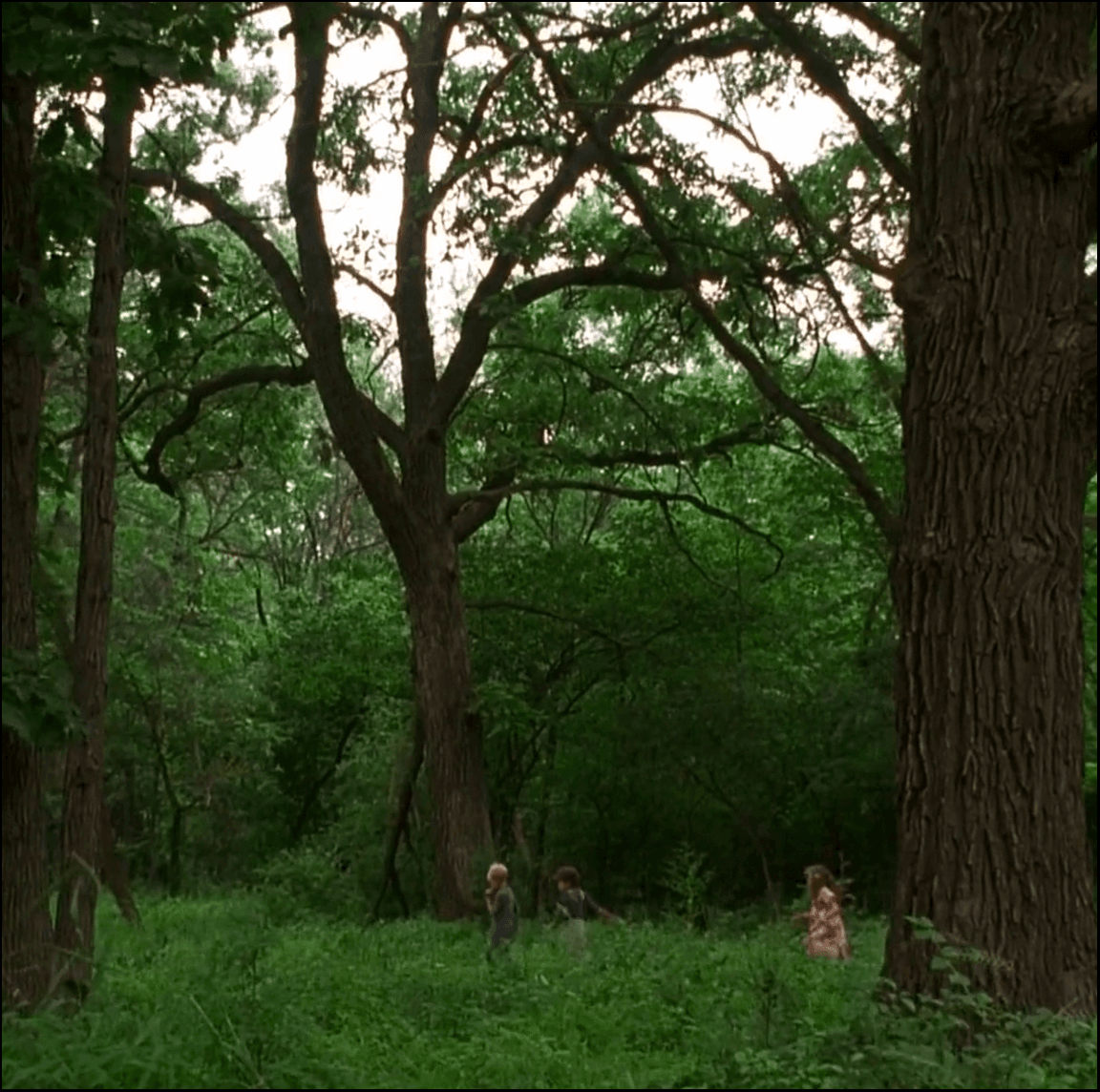
Adults, particularly those born before the 1990s, recall playing with friends in their neighborhoods, local parks, and abandoned places, making up the rules as they went along, without adult supervision.
They often recall a sense of joy, fun, and freedom as they would run, jump. They felt independent, taking risks and figuring things out for themselves.
And this is the kind of childhood that has been common for nearly all of human history. Children, like all young mammals, play.
Outdoor Play in Human History
Visualizing the time children spent playing outside throughout human history
As you can see, the timeline didn't change color or did anything special reaching the end. That's because the period from the 1970s to 2024 is so insignificant on this scale, it's virtually indistinguishable. We've only recently stopped playing outside, but this change is negligible in the context of our entire history.


Dennis the Menace — 1993
Today, this kind of childhood is rare.
Every successive generation of children since the 1970s has seen their outdoor play and freedom shrink. Children's leisure time has gone down, particularly time spent in unstructured outdoor play, while time spent in academic and screen-based activities has increased.
UK Children's Daily Time Use, 1975 - 2015
Percentage change in time spent on various activities since 1975
The Overscheduled, Overprotected Generation
While technology plays a significant role in shaping our children's experiences, it's not the only factor. As parents, we're seeing the effects of our parenting choices not just at home.
Passengers, Not Drivers
Many of today's children are growing up with overscheduled, overly curated childhoods. They have little free time to explore, make mistakes, and learn from them. Kids are passengers on a journey to adulthood, not the driver, because parents are planning and doing so much for them. There isn't enough free play or outdoor time - they learn valuable skills doing those things.
This lack of autonomy can hinder the development of crucial life skills, including problem-solving, creativity, and resilience.
The Misuse of Pop Psychology
There's been an overuse and overreliance on pop psychology in recent years. Terms like trauma and anxiety are often misapplied to normal stress or negative experiences:
Lots of talk of trauma and anxiety about things that wouldn't meet those levels from a clinical definition. So kids (and their parents) associate stress (which is normal and something we all need to learn from) with anxiety, and anxiety is bad, therefore we must remove the stressors.
This approach, while well-intentioned, can prevent children from developing healthy coping mechanisms. It's important to distinguish between normal stress and clinical anxiety, between challenging experiences and actual trauma.
By embracing moments of boredom and demonstrating healthy ways to cope with stress, we can teach our children valuable life skills that will serve them well in the digital age and beyond.
We parents are caught (yet again) in another paradox.
We want to keep our children safe and ensure their success.
We are also often terrified that they will get hurt and that they will fail—so we do everything we can to prevent that from happening.


Kids spent a lot of time outside getting hurt for almost all of human history.
Enter: Risky play
Means that kids can get hurt, and that their chances of getting hurt are higher than if they're more sedentary and playing quietly.
In the surface, it's not clear why a need for risky play would evolve across species, if it increases the chances that something bad will happen to those who partake in it. But when we dig a little deeper, its benefits become obvious.
Risky play provides children with low-cost opportunities to develop the physical and cognitive skills to master the challenges that they will face as they grow older.
Cognitively, it helps them overcome their fears, build their critical thinking skills, and become accustomed to coping independently with difficult situations. Parents are worrying about the wrong causes of injuries and harm. In fact, the very strategies that parents use to try to keep their children safe – driving them around, maximizing supervision, and minimizing freedom – are unintentionally increasing the likelihood of injuries.
The solutions are both simple and hard. We know what children need to thrive. The three key ingredients necessary for thriving play environments are Time, Space, and Freedom.
Time:
Make daily outdoor playtime a priority. That can mean adding it to the schedule, much like we already do for sports or other extra-curricular activities.
Space:
Children need easy access to stimulating spaces for play; flexible spaces where they can use their imagination and explore risks, rather than spaces dominated by boring play structures and strict rules.
 Modern playground are surprisingly sterile and overly safe.
Freedom:
Children need freedom to be able to play the way they choose. The biggest barrier to children's freedom is us—the adults in their lives—and our need to manage our own fears.


Free kids.
Striking a Balance
By prioritizing outdoor play and unstructured time, we're not rejecting technology. Instead, we're creating a healthy balance that allows children to reap the benefits of both worlds. The skills developed through risky play and outdoor exploration - resilience, problem-solving, creativity - are the very skills that will help our children navigate the digital landscape more effectively. As we guide our children through the complexities of the digital age, let's not forget the simple yet profound benefits of simply going outside.
AI